
The short answer
Pain around a wisdom tooth deserves a dental assessment. The dentist can check the tooth and surrounding area and discuss whether monitoring, treatment or removal is appropriate. An impacted tooth does not automatically tell you which option is right for you.
Sources: NHS: Wisdom tooth removal
UNDERSTAND THE PICTURE
Position changes the picture
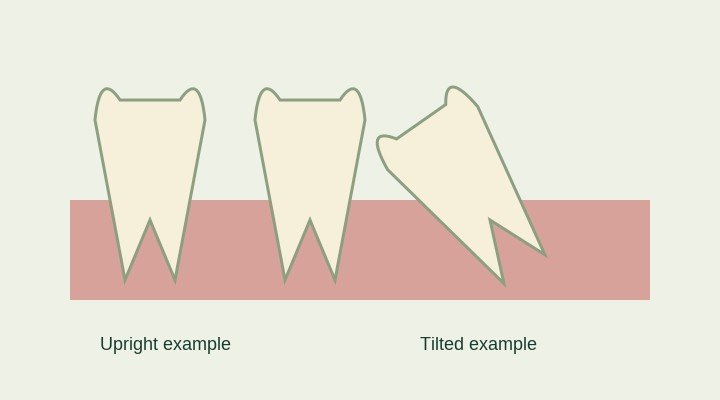
An impacted wisdom tooth does not have enough room to develop or come through normally. A simplified tilted example can explain the term; an examination and appropriate images are needed to understand an individual's tooth.
Static diagram. 3D is optional.
Schematic position examples. Tooth shape and roots vary; position alone does not establish the treatment needed.
In this guide
What does impacted mean?
Wisdom teeth are the third molars at the back of the mouth. A tooth is described as impacted when it does not have enough room to develop or come through normally. Its position may need to be assessed with imaging.
The word describes a position. It is not a treatment instruction you can apply to yourself from an illustration.
Sources: AAOMS: What are impacted wisdom teeth? · NHS: Wisdom tooth removal
Why the examination matters
Wisdom teeth can be associated with pain, swelling, infection around the gum, trapped food or decay. The NHS explains that a wisdom tooth that is not causing problems may be left in place and monitored. Assessment helps distinguish the situation being discussed.
A consultation may lead to care by the dentist or a referral when needed. Ask who would provide the proposed treatment and what your own plan would involve.
- What is causing the concern around this tooth?
- What do the examination and any necessary images show?
- What are the reasons for monitoring or removing it in my situation?
- Would I need a referral, and who would carry out the treatment?
- What should I plan around work, travel, eating and follow-up?
- What does the estimate cover, and who should I contact with questions afterwards?
Sources: NHS: Wisdom tooth removal
Use the 3D view to understand position
The optional diagram lets you turn a simplified back-tooth arrangement and compare an upright tooth with a tilted example. It is a way to understand the word ‘position’ before asking about your own records.
The diagram cannot show your roots, nerve relationships or treatment difficulty. Ask the dentist to explain those questions using the examination and appropriate imaging.
Tell the clinic what you need help planning
When you inquire, you can say that you would like a wisdom-tooth assessment and ask what information to bring. You do not need to select an extraction before you have discussed the findings.
If your concern is fitting a visit around work or a journey to Cainta, ask about that when contacting Smile Philosophy. Use the visit guide to check the clinic's location and opening days.
If swelling makes it difficult to breathe, speak or swallow, seek emergency medical help rather than waiting for an online reply.
Source: NHS: Dental abscess