
The short answer
Some tenderness can happen after a root canal. Follow the instructions from the dentist who treated you, and contact them if pain is severe, getting worse or worrying you. If swelling makes it difficult to breathe, speak or swallow, seek emergency medical help now rather than waiting for a callback.
Sources: NHS: Root canal treatment and recovery · NHS: Dental abscess
In this guide
When should I get emergency help?
Seek emergency medical help now if you have difficulty breathing, speaking or swallowing; a swollen or painful eye or a sudden change in your eyesight; a lot of swelling in your mouth; or difficulty opening your mouth. Do not wait for an online reply.
Sources: NHS: Dental abscess
When should I call the dentist who treated me?
Contact your treating dental team promptly if pain or pressure is severe, keeps getting worse, or continues for more than a few days. Tell them if you notice swelling, if symptoms you had before treatment return, or if you are worried about how the tooth feels.
Also ask for advice if a temporary filling or crown is loose or comes out. If you cannot reach your dentist and the problem cannot wait, seek urgent local dental or medical advice.
Sources: University of Tennessee: Root canal aftercare · NHS: Urgent dental problems
How can I protect the tooth before follow-up?
Follow the instructions you were given for your own treatment. Ask your dentist how to protect the tooth while it has a temporary filling and whether you should avoid biting on it until it is ready.
Keep your follow-up appointment, or contact the dental team if you are unsure what the next visit is for. Some teeth need a crown or another restoration; the plan depends on the tooth and the assessment.
Sources: NHS: Root canal treatment and recovery · University of Tennessee: Root canal aftercare
What if the treatment was months or years ago?
A previously treated tooth can develop a new concern. Pain by itself does not establish the cause or mean that another root canal is automatically needed. Tell the dentist about the earlier treatment and ask what an examination would clarify.
Sources: Leeds Teaching Hospitals: Understanding root canal treatment
What can I ask when I contact the clinic?
It can help to say when the treatment took place, whether you still have a temporary filling, and what has changed. You do not need to decide on a procedure before an assessment.
- What might explain the symptoms, and what needs to be checked?
- Is the current filling or restoration protecting the tooth as intended?
- What would the next visit or proposed plan include?
- Whom should I contact if symptoms change before the visit?
If swelling makes it difficult to breathe, speak or swallow, seek emergency medical help now rather than waiting for an online callback.
Source: NHS: Dental abscess
UNDERSTAND THE PICTURE
A look inside a tooth
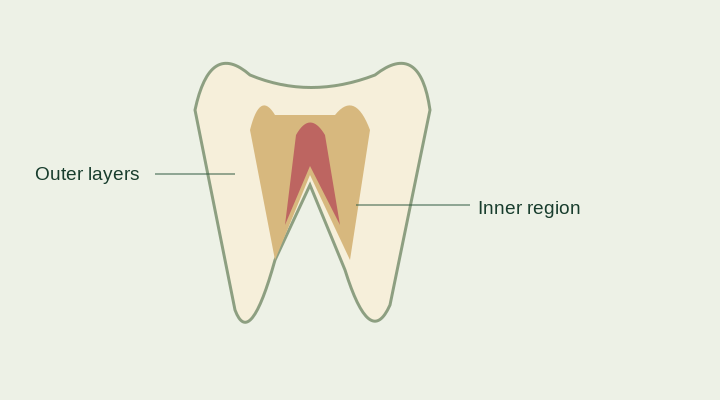
A tooth has outer layers and an inner space. This optional view can help you discuss the parts of a tooth with your dentist; it cannot identify the cause of your symptoms.
Static diagram. 3D is optional.
Schematic layers separated for learning. Colours and shapes explain regions; roots and canals vary between teeth.