VIEW 01 / 04
Start with a clinical question
Your concerns, dental history and examination guide the records needed. Not every visit needs new imaging.
DIGITAL DIAGNOSTICS
Examination and useful diagnostic records help turn a concern into an informed treatment discussion.
UNDERSTAND YOUR CARE · INTERACTIVE EXPLANATION
A surface model and an X-ray answer different questions. Separate the information to see why your examination comes first.
Read the explanation below. The interactive model loads when you choose.
Drag to rotate. Pinch to zoom. Keyboard: arrow keys rotate and tilt, + / − zoom, Home resets the view.
VIEW 01 / 04
Your concerns, dental history and examination guide the records needed. Not every visit needs new imaging.
VIEW 02 / 04
A digital impression records surface shape. The mesh represents that outer surface; it does not reveal nerves, roots inside bone or a hidden infection.
VIEW 03 / 04
Dental X-rays can help assess structures that cannot be seen directly. The cutaway here explains that difference; it is not an X-ray interpretation.
VIEW 04 / 04
Records support the dentist’s examination and explanation. Separate the model to compare surface information with internal anatomy, then discuss what the findings mean for your options.
LOOK AT A PART
A simplified reference tooth.
A QUESTION TO BRING
“What question will this record answer, and do my existing records help?”
Discuss your concernsRead how assessment, imaging when indicated and treatment decisions fit together.
How records relate to endodontic careThese are teaching shapes, not a scan or X-ray. A surface scan does not show internal anatomy. No particular scanner or imaging service is implied; ask what is appropriate and available for your assessment.
Patient education sources: ADA · Tooth anatomy · ADA · Dental X-rays · ADA · Digital dentistry technologies
DURING YOUR VISIT
See what the findings mean.
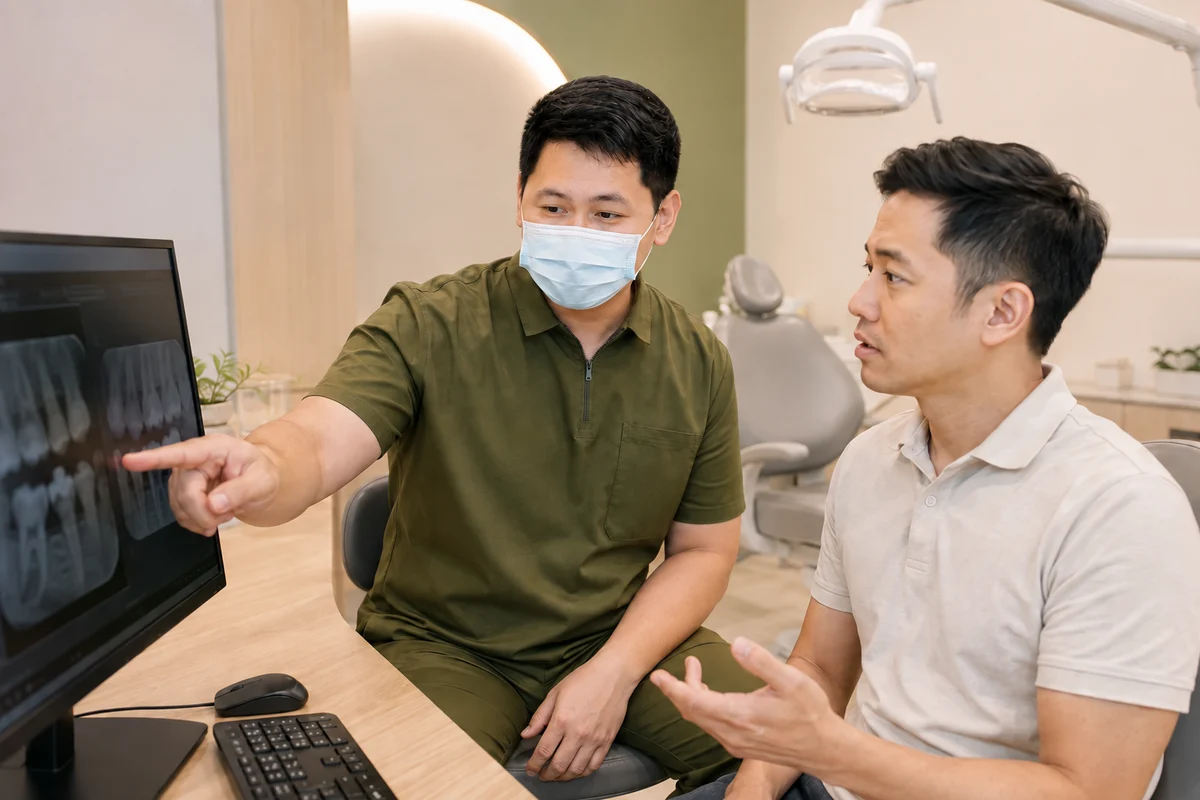
Ask what a record helps explain and how it affects your options. Your questions belong in the conversation.
The dentist examines your teeth and discusses symptoms, history and goals. Digital tools support this conversation; they do not replace it.
Imaging and other digital records may be recommended when they help answer a clinical question or plan treatment. Ask why a record is needed.
Ask what the findings mean, whether further assessment is required and how they affect your options. Your plan is individual to your circumstances.
General patient education. An examination is needed for individual advice.
YOUR NEXT STEP CAN BE A CONVERSATION
Tell us what you would like to understand.
We’ll help you plan a visit to the clinic.
 Smile PhilosophyDENTAL CLINIC
FACEBOOK MESSENGER
Ask about booking a visit or the dental care you’re considering.
Continue in MessengerYour conversation continues in Messenger, in the app or a new tab. If needed, Facebook will ask you to sign in there.